
Short answer
A heat pump can work with radiators, but only when the system is checked properly. The question is not simply whether radiators exist. The question is whether those radiators can deliver enough heat at water temperatures that make sense for heat pump operation. If the system needs high water temperatures all the time, the heat pump may not perform as the owner expects.
The mild Cyprus climate helps because heating demand is often less severe than in colder markets. Still, each building has its own losses. A renovated home in Nicosia with better glazing and insulation behaves very differently from an older house with weak thermal protection.
Where this solution fits
This solution is relevant in renovations where radiators already exist and the owner wants to examine replacing an oil or gas boiler with a heat pump without rebuilding the full heat-emitter system. It can also fit homes where the existing radiators are generously sized, or where selected radiators can be replaced with larger ones.
It is useful when underfloor heating is not practical because of floor build-up, renovation cost, programme constraints or disruption. For plumbers and installers, the existing network should be treated as a system to be assessed, not as something automatically suitable.
For developers, radiators with heat pumps can be considered in specific scenarios, but the design needs more careful checking than a low-temperature system such as underfloor heating.
What must be checked before installation
The first check is building heat loss. If the building has high losses, the radiators must deliver more heat. That may require higher water temperatures or larger emitters. Floor area alone is not enough for a technical decision.
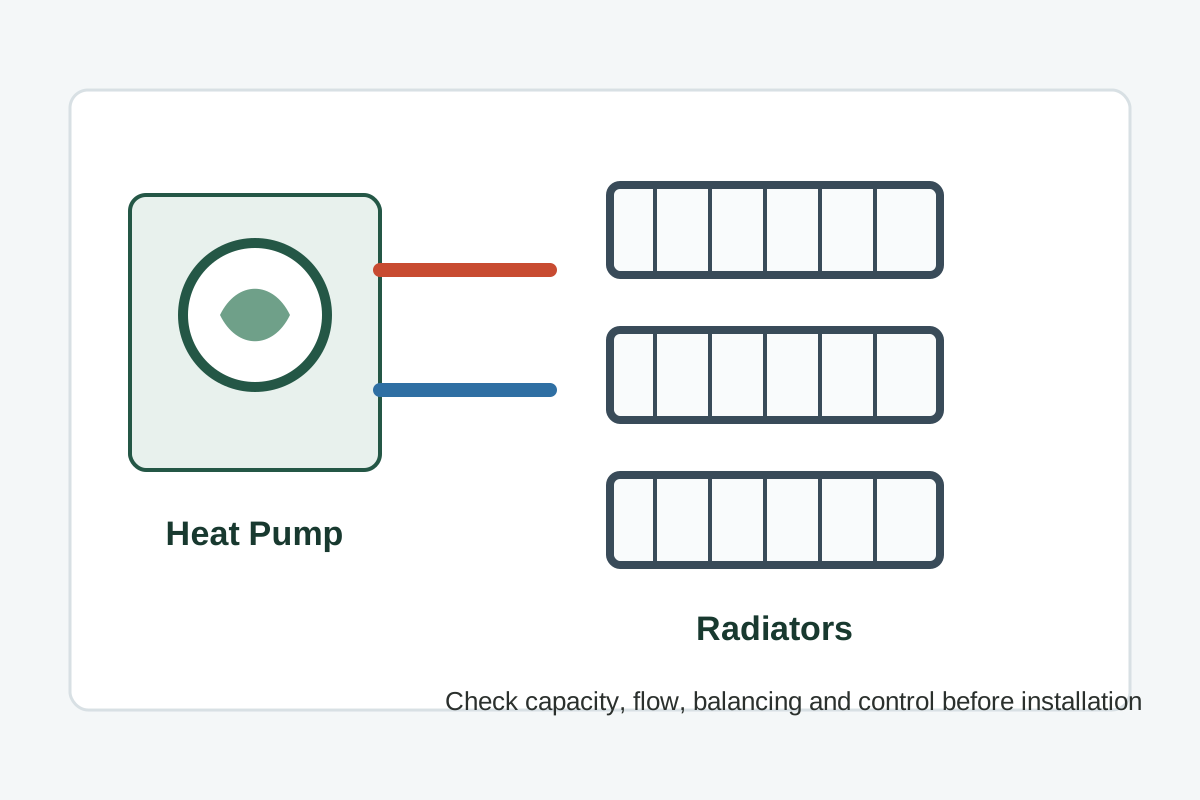
The second check is radiator output at the intended operating temperatures. A radiator that performs well with a high-temperature boiler may provide much less heat at lower water temperatures. This does not automatically reject the solution. It means the existing radiators must be reviewed, and some may need to be changed.
The third check is flow rate and network resistance. A heat pump needs stable water circulation. Old pipework, restrictions, dirty strainers, closed valves or unbalanced circuits can create operating problems.
The fourth check is balancing. If nearby radiators take most of the flow and distant radiators are starved, the user may increase water temperature to compensate for a hydraulic issue. That is not good design. Balancing is essential.
The fifth check is control. Weather compensation and a sensible heating curve help the heat pump respond to outdoor conditions. Stable operation at reasonable temperatures is often better than aggressive on/off operation.
Common mistakes
The most common mistake is saying either “heat pumps do not work with radiators” or “heat pumps always work with radiators”. Both statements are too simple. The correct answer is that they work when the radiators, building and hydraulic network allow it.
Another mistake is failing to record the radiators. Dimensions, type, location and condition matter. Old systems may also need cleaning and suitable filtration before new equipment is protected properly.
There is also a usage expectation issue. A heat pump does not necessarily behave like an old boiler that quickly raises very high water temperature. It needs different controls and a steadier operating pattern.
Practical recommendation
Before selecting the heat pump, record the radiators, rooms, installation age, comfort complaints and usage habits. If some rooms do not heat well with the existing boiler, the cause should be found. It may be radiator size, flow, air, dirt, settings or room heat loss.
For many homes in Cyprus, the solution may be feasible with proper checking and selected radiator changes. For others, a different approach may be better. A technical review protects both the homeowner and the installer from unrealistic expectations.
Expected use should also be discussed. A home heated steadily every day is not the same as a property heated for only a few hours at a time. The control strategy must suit the way the space is actually used.
Conclusion and CTA
A heat pump with radiators can work properly when the whole system is assessed. Send radiator photos, room information and existing boiler-room details to Thomas Moudouros Ltd for practical technical guidance.
Related topics
Solutions
- Heat Pumps
- Radiators Boiler Rooms
- Boiler Room Replacement